Main Devices in a Small Lab
The main hardware in a home lab usually starts with a router, a managed switch, and one system that can run services or virtual machines. The router connects the lab to the internet and can handle jobs like NAT, firewall rules, and sometimes VPN access. The switch connects local devices together and is useful when working with VLANs or testing how different network groups communicate. A server or mini PC gives a place to run software such as file storage, game servers, virtual machines, or monitoring tools. Some people also add a wireless access point, battery backup, or patch panel depending on how big the lab is. The exact hardware can change, but the purpose is the same, which is to create a place to learn by actually building and testing things.
Why Hardware Choice Matters
Picking hardware for a lab is not just about buying the most powerful gear. It is also about choosing devices that fit the kind of practice a person wants to do. Someone who wants to learn switching and VLANs may care more about a managed switch, while someone interested in servers may focus on storage and memory. Power use, fan noise, and available space also matter because a lab that is too loud or expensive to run all the time becomes harder to keep online.
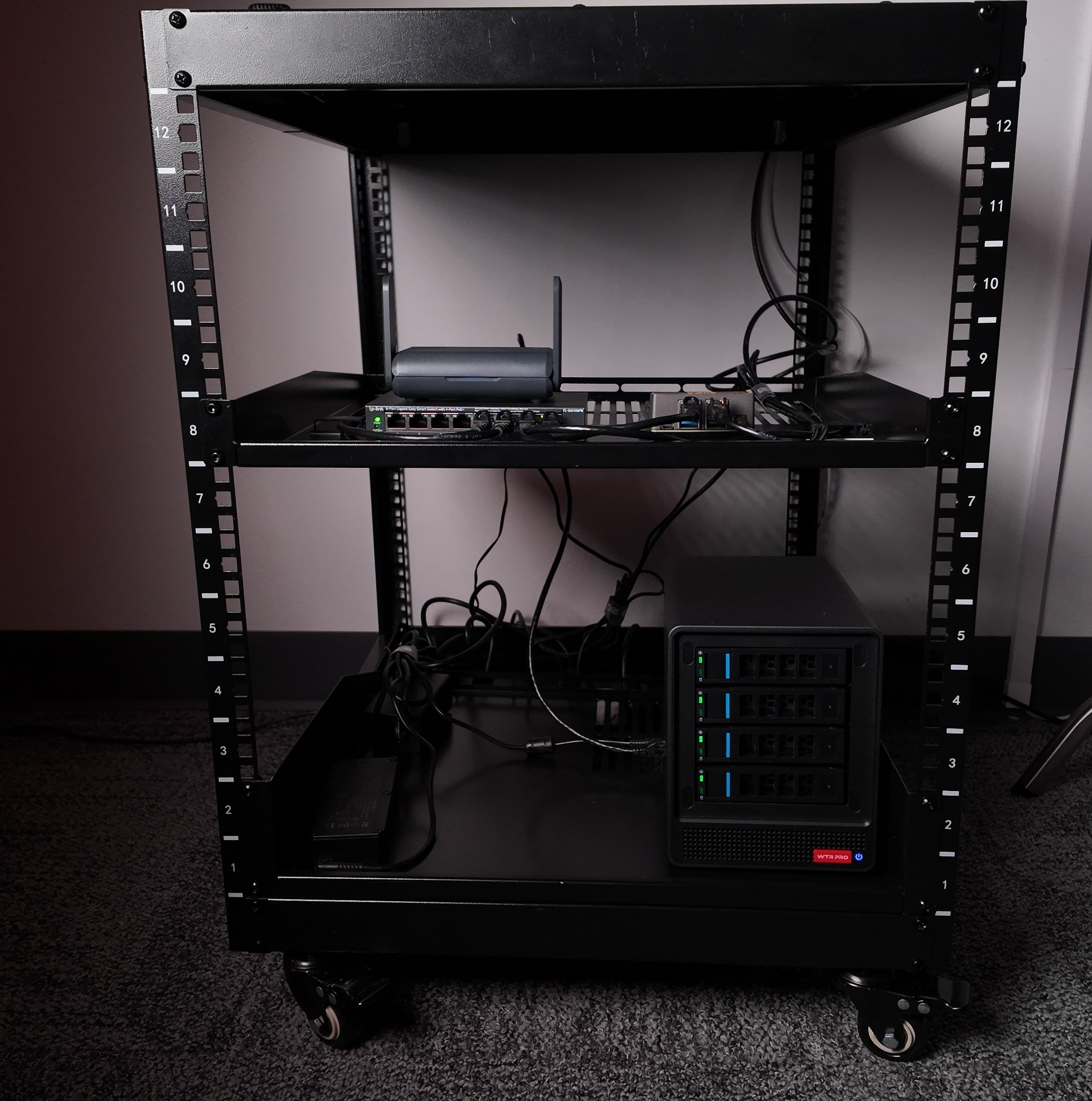
Ambient Fan noise
Below is a recording of the ambient fan noise the equiptment in my homelab makes.